
 English
  Español
  Português
  عربى
عربى 

Paper weight is often treated as a direct indicator of corrugated board strength. Yet the structure formed by the fluted medium can be equally influential. During corrugated cardboard production, flute height, pitch, shape, and liner combination work together to determine board caliper, stiffness, cushioning, and compression behavior. A heavier paper grade does not automatically create a stronger or better-performing board.
Flute Geometry Creates the Board Structure
Corrugated board gains much of its structural behavior from the wave-shaped medium between the liners. Flute geometry defines how much vertical space the medium creates and how the board responds to external loads.
- A flute: roughly 4.0–5.6 mm in height, offering greater board thickness and cushioning capacity.
- C flute: commonly around 3.3–4.0 mm, balancing stacking strength, cushioning, and board thickness.
- B flute: approximately 2.0–2.8 mm, creating a denser structure with useful flat-crush and printing characteristics.
- E flute: around 1.13–1.40 mm, supporting thinner boards and detailed printed packaging.
These differences are not simply dimensional. Flute height changes the distance between liners, while flute pitch influences the number of arches within a given board width. Both factors affect bending stiffness and load distribution.
Paper Weight Still Has a Major Role
Paper weight, commonly expressed as GSM, affects the amount of fiber available within liners and corrugating medium. Higher basis weight can contribute to greater resistance against compression, puncture, and handling forces. Yet the result depends on how that material is arranged inside the board structure.
Consider two boards built with similar paper weight but different flute profiles. The board using a taller flute may provide greater caliper and cushioning, while a finer flute can offer a flatter surface and different crush behavior. ASTM guidance also notes that board caliper depends on flute height, material thickness, paper compressibility, roll wear, and crushing during processing.
Geometry Can Change Performance Without Adding GSM
Increasing paper weight is not the only route toward stronger packaging. Corrugated cardboard production can achieve different performance characteristics through changes to flute structure.
- Higher flute profiles can provide additional thickness and cushioning space.
- Finer flute profiles can create a denser board surface with different crush and printing characteristics.
- Flute pitch affects the number of load-bearing arches across the board.
- Crest and valley geometry influence how compressive forces travel through the medium.
Research on corrugated board geometry describes flute structure through parameters such as wavelength and height, showing that geometry is a fundamental part of the board's mechanical behavior rather than merely a visual feature.
What This Means for Corrugated Production Lines
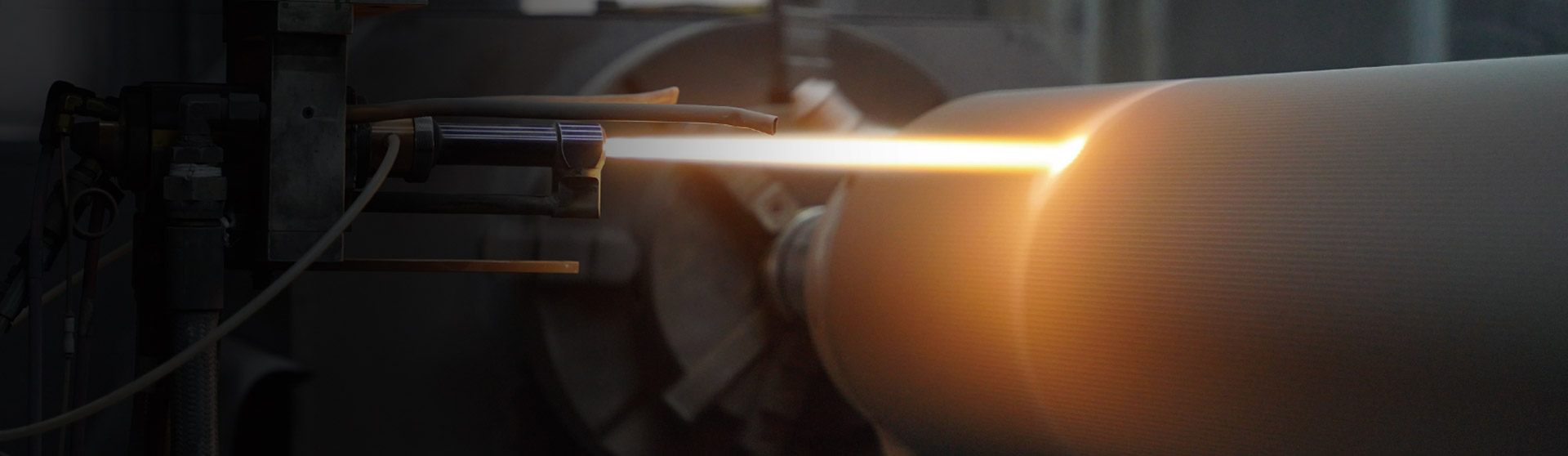
Flute geometry places specific demands on the corrugating rolls and forming section. Roll profile determines the flute shape produced by the corrugating machine, so dimensional accuracy becomes important for maintaining consistent board caliper and structural properties.
Excessive crushing can reduce board thickness and bending stiffness. ASTM material also connects crush deformation with reduced compression strength, making flute preservation an important part of corrugated cardboard production.
Paper Weight and Flute Geometry Need to Work Together
The practical question is not simply whether flute geometry matters more than paper weight. Board performance comes from the interaction between both variables. A suitable combination can achieve the required ECT, caliper, stiffness, cushioning, and conversion behavior without relying on heavier paper alone.
Packaging producers therefore need to evaluate flute height, flute pitch, paper GSM, board caliper, ECT, and final box requirements as connected parameters. This approach gives corrugated cardboard production greater control over board structure and helps match the finished material with its intended packaging application.