
 English
  Español
  Português
  عربى
عربى 


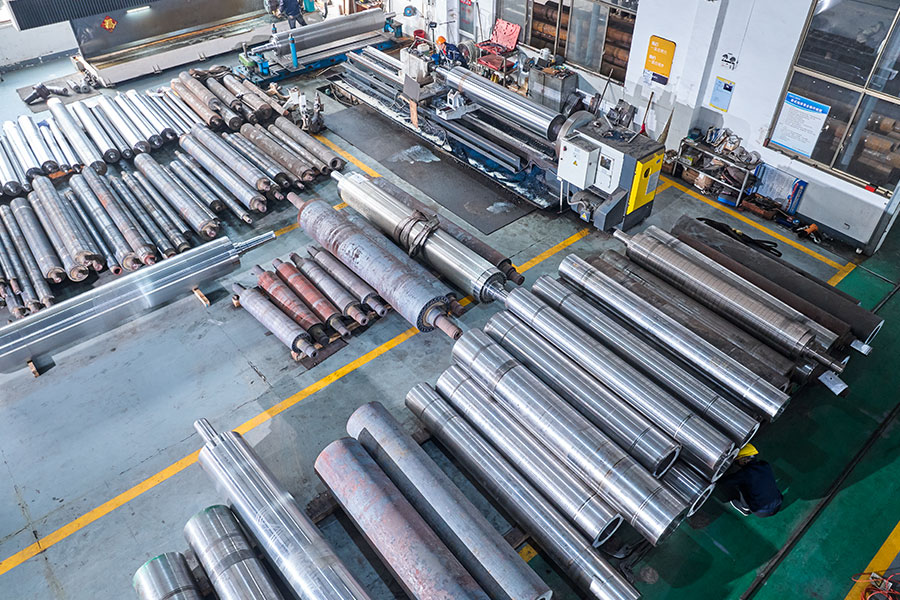
Box compression performance is usually discussed through board grade, ECT, liner strength, and box dimensions. The equipment forming the flute deserves equal attention. Corrugated flute rollers determine the profile of the corrugating medium, making their geometry closely connected with board caliper, flute consistency, and structural strength. Small changes in flute formation can become measurable differences after the board is converted into a finished carton.
Flute Rollers Define More Than Flute Height
The profile machined into corrugating rolls determines the basic shape of the flute. ASTM D5639 notes that flute height is determined by the flute profile of the corrugating rolls, while actual board caliper can also be affected by paper compressibility, roll wear, and crushing during processing.
- Flute height affects board thickness and the distance between the liners.
- Flute pitch controls the spacing and frequency of the corrugation pattern.
- Tip radius influences how the medium bends around the roll profile.
- Profile consistency helps maintain uniform caliper across the sheet width.
Common reference values cited by ASTM include approximately 4.675 mm for A flute, 2.465 mm for B flute, and 3.630 mm for C flute, although actual dimensions can vary with roll manufacture and process conditions.
Crushed Flutes Can Reduce Compression Strength
Strong paper cannot fully compensate for damaged flute structure. Excessive pressure at feed rolls, printing sections, or other contact points can reduce board thickness and bending stiffness. ASTM guidance specifically connects excessive crush with reduced compression strength of the finished box.
That relationship makes the condition of corrugated flute rollers relevant beyond the corrugating section itself. Uneven roll wear or an inconsistent working gap can produce variations in flute formation. Areas with reduced flute height may have lower structural thickness and different load-bearing behavior.
Profile Accuracy Influences ECT and BCT
ECT measures the resistance of corrugated board against edgewise compression, while BCT evaluates the compression capacity of the assembled carton. Board structure sits between these two measurements. Research into corrugated fiberboard has shown that flute shape can affect edgewise compression strength, with certain flute geometries providing stronger structural behavior without simply increasing paper weight.
Another study examining flute angle found that changes in flute orientation can alter ECT, bending behavior, and box compression characteristics. The results demonstrate how geometric details within the flute structure can influence finished-box performance.
What Roll Design Changes on the Production Floor
Roll design becomes especially important during production of different flute profiles. A machine producing B flute requires a different forming geometry from a machine producing C or E flute. The roll profile must create the intended wavelength and height while avoiding unnecessary crushing of the medium.
- B flute: commonly uses a smaller flute height and tighter flute pattern, supporting relatively flat board surfaces.
- C flute: provides a taller structure with a balance between cushioning and compression performance.
- E flute: uses a fine profile suitable for thinner board structures and detailed packaging surfaces.
Changing between flute specifications therefore involves more than replacing a paper grade. The forming geometry needs to match the intended board structure and the required dimensional tolerance.
Roll Wear Can Become a Board Quality Issue
Long production runs gradually change the working condition of forming components. ASTM guidance identifies roll wear as a factor that can affect actual corrugated board caliper.
Uneven wear may create differences between the theoretical flute profile and the profile actually produced on the machine. Such differences can appear as caliper variation, inconsistent flute height, or changes in board stiffness. Quality inspection therefore needs to consider both finished-board measurements and the forming condition behind them.
Should Corrugated Flute Rollers Be Evaluated by Box Performance?
Looking only at roller dimensions provides an incomplete picture. A more useful evaluation connects flute height, pitch, caliper, ECT, bending stiffness, and BCT. Research has repeatedly linked flute structure with compression behavior, while industry testing treats ECT as an important indicator related to stacking strength.
For corrugated cardboard production, the role of corrugated flute rollers therefore extends beyond forming a wave in the medium. Their profile accuracy influences the structural foundation of the board. Properly matched roll geometry, controlled forming pressure, and consistent flute dimensions can help maintain the board characteristics required by the final carton design.