
 English
  Español
  Português
  عربى
عربى 

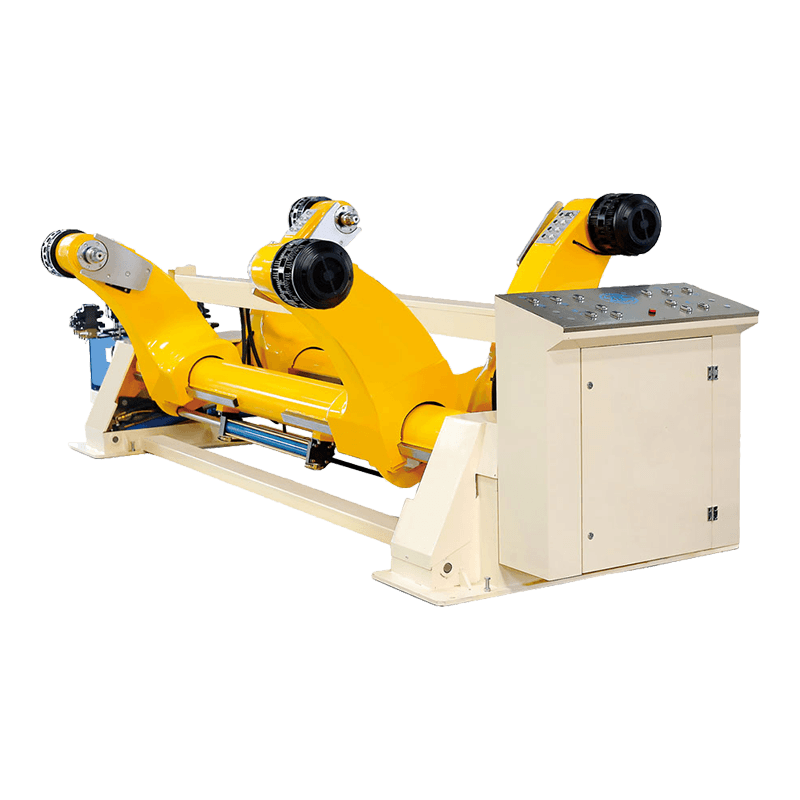
In corrugated board production, smooth material feeding is important for maintaining steady workflow across multiple machines. One key piece of equipment in this system is the Mill Roll Stand, which holds and feeds large paper rolls into the production line.
Without stable roll support, downstream processes such as corrugating, cutting, and stacking can face interruptions. A Mill Roll Stand is designed to handle heavy paper rolls while maintaining controlled unwinding during continuous operation.
Basic Structure and Functional Role
A typical Mill Roll Stand consists of a base frame, supporting arms, a clamping system, and a braking unit. These components work together to hold large paper rolls securely while allowing controlled rotation.
In a Mill Roll Stand, hydraulic or mechanical systems are often used to lift and position the paper rolls. Once in place, the roll is centered and locked before feeding begins.
The braking system is another important part. It helps regulate tension during unwinding, which reduces issues such as paper tearing or uneven feeding speed in the production line.
Role in Corrugated Board Production
Corrugated board lines require continuous paper feeding from multiple layers of rolls. A Mill Roll Stand supports this by holding liner paper or corrugating medium rolls at the start of the process.
When the roll rotates, paper is fed into the next stage, where it is shaped into fluted layers and combined with flat liners. If tension is inconsistent, the final board quality can be affected, especially in terms of alignment and bonding.
In many factories, multiple stands are used together so that roll changes can happen without stopping the production line. This setup helps reduce downtime during material replacement.
Mechanical Stability and Load Handling
Because paper rolls can be heavy and wide, structural stability is important. A Mill Roll Stand is built with reinforced steel frames to handle continuous load without shifting during operation.
During use, vibration control also matters. Small movements in the stand can affect paper alignment, especially at higher feeding speeds. For this reason, base anchoring is often reinforced during installation.
Hydraulic expansion shafts are commonly used to secure the core of the paper roll. This allows stable rotation without slippage during unwinding.
Operation and Control Adjustments
Operators adjust tension and alignment based on paper type and production speed. A Mill Roll Stand may include manual or automated control systems depending on the production setup.
In some systems, sensors monitor roll diameter and remaining material. This helps operators prepare for roll changes in advance, reducing unexpected stops.
Brake pressure adjustments are often made during operation to match changes in roll weight as material is consumed.
Maintenance and Long-Term Use
Regular maintenance helps maintain stable performance. Bearings, hydraulic lines, and clamping components are checked for wear or leakage.
In a Mill Roll Stand, dust and paper fiber buildup can affect moving parts over time. Cleaning schedules are often included in daily or weekly maintenance routines.
Lubrication is also important for reducing friction in rotating components. Without proper care, feeding consistency may become uneven during long production cycles.
Integration in Modern Production Lines
Modern corrugated factories often integrate the Mill Roll Stand into automated production systems. This allows smoother coordination between unwinding, corrugating, and cutting machines.
A Mill Roll Stand works as the starting point of the entire production chain, and its performance influences downstream efficiency. Even small adjustments in roll tension can affect the final board structure.
A Functional Starting Unit in Continuous Production
Although it may appear simple in structure, the Mill Roll Stand plays a steady role in supporting continuous corrugated board production. It manages heavy roll handling, tension control, and feeding stability.
As production systems continue to evolve, the Mill Roll Stand remains a key component in keeping material flow organized and consistent across packaging lines.