
 English
  Español
  Português
  عربى
عربى 
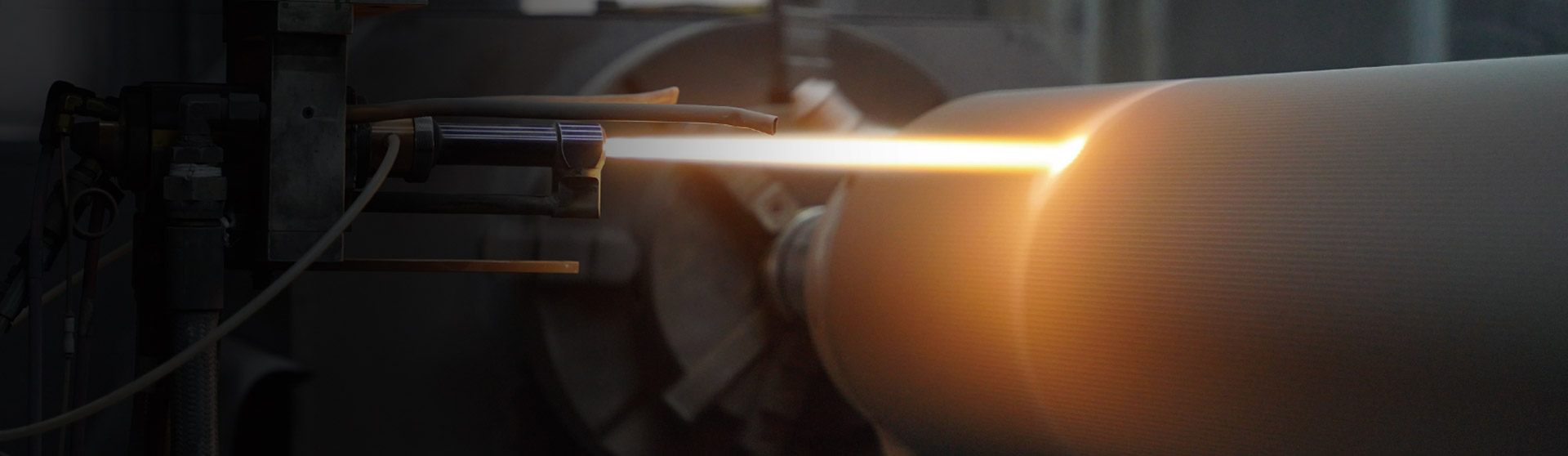

Hard chrome plated corrugating rollers are widely used in corrugated board production because of their high surface hardness and smooth finish. Despite these advantages, wear still occurs under continuous load conditions. Once wear begins, flute geometry changes, glue transfer becomes unstable, and board strength drops noticeably. The issue is rarely caused by a single factor; instead, it develops through mechanical stress, surface fatigue, contamination, and thermal imbalance.
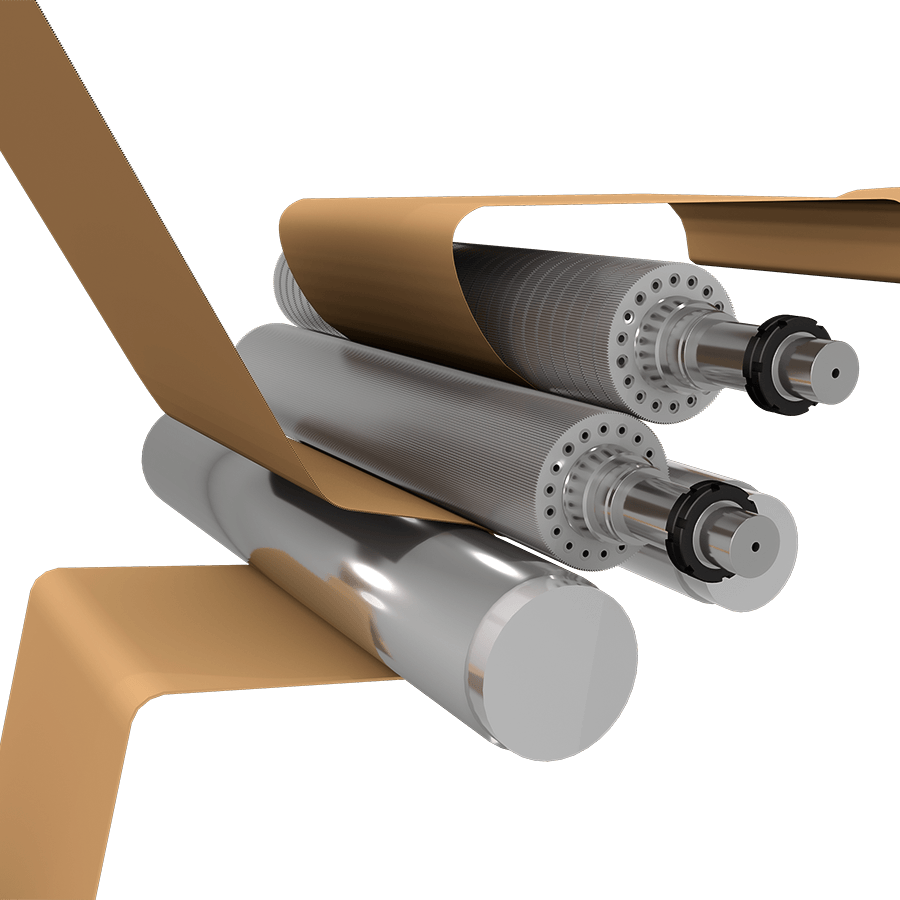
Surface Hardness Versus Operational Stress
Hard chrome layers typically reach hardness levels around HRC 65–70, yet corrugating production environments impose repeated compressive and frictional forces that gradually exceed surface endurance.
- Continuous nip pressure loading accelerates micro-abrasion on flute peaks
- High-speed rotation above 150–250 m/min increases friction heat accumulation
- Repeated flute forming cycles create fatigue points on the chrome layer
Once micro-cracks form, wear expands faster because the exposed substrate has lower resistance compared to the chrome surface.
Thermal Stress and Expansion Mismatch
Corrugating rollers operate under heating systems where steam or hot oil is applied to stabilize flute formation. Temperature gradients between coating and steel core introduce expansion differences.
- Operating temperature range of 160–200°C increases thermal cycling stress
- Expansion mismatch between steel core and chrome layer generates micro-fractures
- Rapid start-stop cycles intensify surface fatigue accumulation
Over time, thermal fatigue causes fine cracks that expand under mechanical load, accelerating surface degradation.
Abrasive Wear from Paper and Contaminants
Corrugated production uses paperboard that contains recycled fibers, fillers, and mineral particles. These act as abrasive media against roller surfaces.
- Silica and calcium carbonate fillers increase micro-scratching on flute surfaces
- Paper dust accumulation forms uneven abrasive layers
- Glue residue contamination alters surface friction coefficient
Even minor contamination buildup changes contact behavior between roller and board, producing uneven wear patterns and localized groove damage.
Flute Geometry Deformation Over Time
Corrugating rollers are precision components designed to maintain strict flute profiles. Wear gradually modifies flute shape, reducing structural consistency in the final board.
- Flute tip flattening reduces bonding area for adhesive application
- Groove edge rounding changes compression behavior of paper layers
- Uneven flute height variation leads to board thickness inconsistency
Once geometry distortion begins, glue consumption increases and board compression strength becomes less predictable.
Lubrication, Alignment, and Bearing Influence
Mechanical support systems strongly influence roller lifespan. Even minor misalignment can concentrate load on specific roller sections.
- Bearing wear or clearance increase causes roller wobble during rotation
- Shaft misalignment beyond 0.05–0.1 mm creates uneven pressure distribution
- Insufficient lubrication increases friction between moving parts
Once imbalance develops, wear concentrates on specific zones rather than spreading evenly across the roller surface.
Chrome Layer Quality and Micro-Porosity
Hard chrome plating is durable but inherently brittle and micro-porous. These characteristics influence long-term wear behavior.
- Micro-porosity in coating structure allows moisture penetration over time
- Poor bonding between substrate and plating increases risk of flaking
- Grinding-induced micro-cracks propagate under repeated load cycles
Once the protective layer is compromised, corrosion and mechanical wear accelerate simultaneously.
Operational Load Variation and Pressure Peaks
Corrugating lines rarely operate under perfectly stable conditions. Pressure variation across production cycles creates uneven wear distribution.
- Nip pressure fluctuations above ±0.1 mm tolerance concentrate stress on flute peaks
- Speed changes during job transitions create transient overload conditions
- Material thickness variation shifts contact pressure dynamically
These fluctuations gradually reshape roller surfaces, even under normal operating conditions. Wear on hard chrome corrugating rollers develops through a combination of thermal fatigue, abrasive contamination, mechanical misalignment, and coating limitations. Each factor alone may appear minor, yet continuous exposure produces cumulative surface degradation. Stable performance depends on controlling pressure consistency, maintaining alignment precision, reducing abrasive contamination, and monitoring early-stage surface changes. Once wear progresses beyond micro-level defects, flute geometry and board quality begin to degrade rapidly, making early detection and preventive maintenance essential for sustained production stability.