
 English
  Español
  Português
  عربى
عربى 
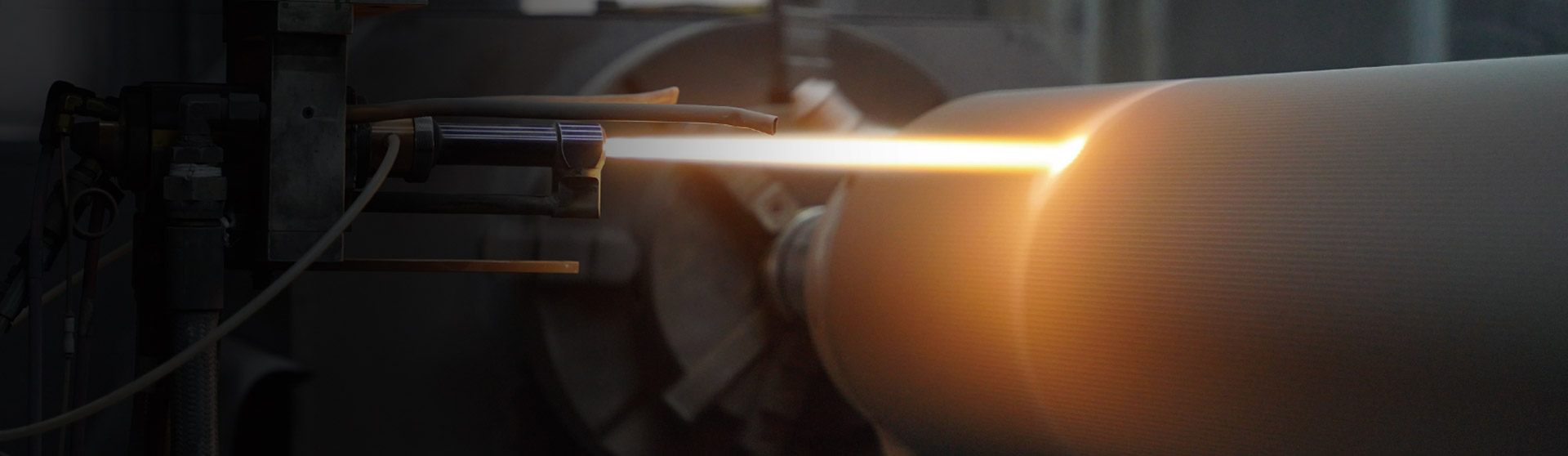

Corrugated board production depends on a tightly controlled interaction between heat, pressure, adhesive behavior, and paper deformation speed. Even small thermal variations at the flute-forming interface can reshape how medium paper bends and locks into structure. Surface heating, especially applied through roller-based systems, is increasingly discussed as a factor that may reshape stability windows in high-speed corrugation lines.
Among the modern thermal configurations, the Peripheral Heating Corrugating Roller introduces a heat delivery approach that concentrates temperature closer to the working circumference rather than relying purely on internal steam diffusion. That structural difference creates a more direct thermal influence on flute tips and valley transitions during forming cycles.
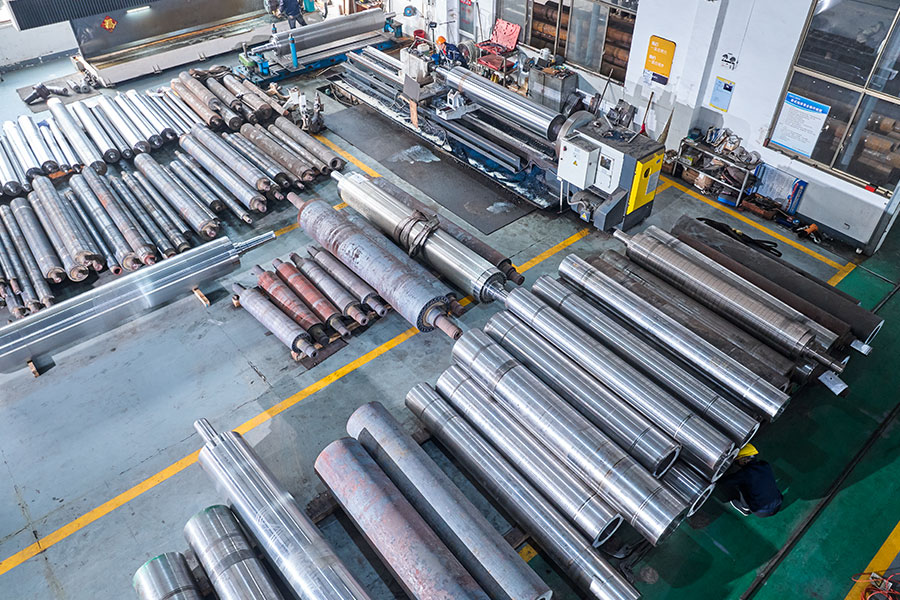
Heat placement and immediate flute response
Flute formation occurs in milliseconds as paper passes through meshing rollers. Thermal energy determines how easily fibers deform without cracking or spring-back effects. Surface-focused heating changes the response curve of the medium by reducing temperature lag between roller body and contact zone.
- Faster thermal contact response reduces delay between heating input and paper deformation behavior
- More uniform surface temperature stabilizes flute peak geometry across width direction
- Reduced micro temperature gradients limit localized over-softening or under-forming zones
Technical observations from industrial corrugation systems indicate operating speeds reaching 200–400 m/min in optimized high-speed lines using advanced heated rollers, where surface temperature consistency plays a structural role in maintaining flute geometry integrity.
Thermal influence on paper deformation behavior
Paper medium exhibits viscoelastic characteristics, meaning its deformation depends heavily on temperature and stress rate. Heating applied closer to the contact surface modifies fiber flexibility just before mechanical compression occurs.
- Fiber plasticity shift improves bendability at flute peaks without excessive collapse
- Adhesive activation timing adjustment supports more synchronized bonding at flute valleys
- Reduced rebound effect stabilizes flute height after exiting nip zone
Surface heating does not simply raise temperature; it changes the timing of how energy enters the fiber structure, which directly impacts flute consistency under dynamic loads.
High-speed instability patterns linked to thermal distribution
At elevated machine speeds, flute instability often appears as uneven pitch, micro-collapse, or intermittent bonding variation. These issues are frequently associated with uneven thermal distribution across roller circumference or width zones.
Systems utilizing a Peripheral Heating Corrugating Roller attempt to reduce this variability by minimizing temperature drop between roller surface and contact point. This becomes particularly relevant in continuous runs where thermal saturation cycles can otherwise drift.
- Reduced thermal lag helps maintain consistent flute geometry during speed fluctuations
- Improved heat retention at contact zone supports steady adhesive viscosity behavior
- Lower fluctuation amplitude in forming pressure sensitivity across long production runs
Industrial data from corrugating roller systems shows that operational surface hardness above HRC60 combined with a controlled heating design can maintain stable forming behavior even at high throughput conditions.
Interaction between heating pattern and corrugation geometry
Corrugation grooves themselves influence how heat spreads through contact points. Ridge areas experience higher compression, while valley zones retain more adhesive interaction time. Surface heating modifies this asymmetry by balancing thermal energy across uneven geometry.
Research on heated corrugation surfaces highlights that coupling between groove patterns and heat distribution can create dynamic changes in localized flow behavior, especially under rapid mechanical cycling. This interaction becomes more noticeable at higher speeds where thermal equilibrium cannot fully stabilize between cycles.
- Groove-tip overheating risk reduction prevents localized paper weakening
- Balanced heat diffusion across flute walls improves structural symmetry
- Controlled adhesive penetration depth enhances bonding uniformity
Operational thresholds and stability boundaries
Flute stability is not governed by heat alone. It depends on combined thresholds involving temperature, nip pressure, paper grade, and line speed. Surface heating shifts these thresholds by altering how quickly paper reaches deformation temperature before entering the corrugation zone.
Typical high-speed corrugation systems operate within 150–400 m/min ranges depending on machine design. Within this range, small thermal inconsistencies can amplify into geometric deviations if not controlled.
- Too low surface temperature increases stiffness and flute cracking risk
- Excess surface heat may weaken ridge compression resistance
- Balanced thermal window supports stable flute height and pitch consistency
The role of surface heating becomes less about ideal temperature and more about maintaining a controlled thermal band across rapid mechanical cycles.
System integration considerations
Corrugation lines integrate multiple subsystems including single facers, adhesive units, and roll stands. A change in heating strategy affects downstream behavior, particularly glue setting dynamics and liner bonding alignment.
Roll stand tension consistency and glue viscosity response both react to surface temperature stability. That is why thermal design decisions often extend beyond roller geometry into full line synchronization strategy.
- Synchronized temperature-pressure balance improves board uniformity
- Reduced thermal drift across modules stabilizes long-run output quality
- Improved coordination between forming and bonding stages
In this context, surface heating is not an isolated upgrade but part of a broader thermal-mechanical coordination system.
Closing technical perspective
Surface heating changes more than temperature values inside a corrugation line. It adjusts how energy interacts with paper deformation timing, adhesive activation, and flute geometry stabilization under high-speed conditions. The use of systems like the Peripheral Heating Corrugating Roller highlights a shift toward localized thermal precision rather than generalized heating volume.
Flute stability in modern corrugation is therefore less about static settings and more about how quickly and evenly thermal energy adapts to mechanical motion cycles. That balance defines whether high-speed production maintains consistent structural quality or drifts into intermittent instability patterns.