
 English
  Español
  Português
  عربى
عربى 
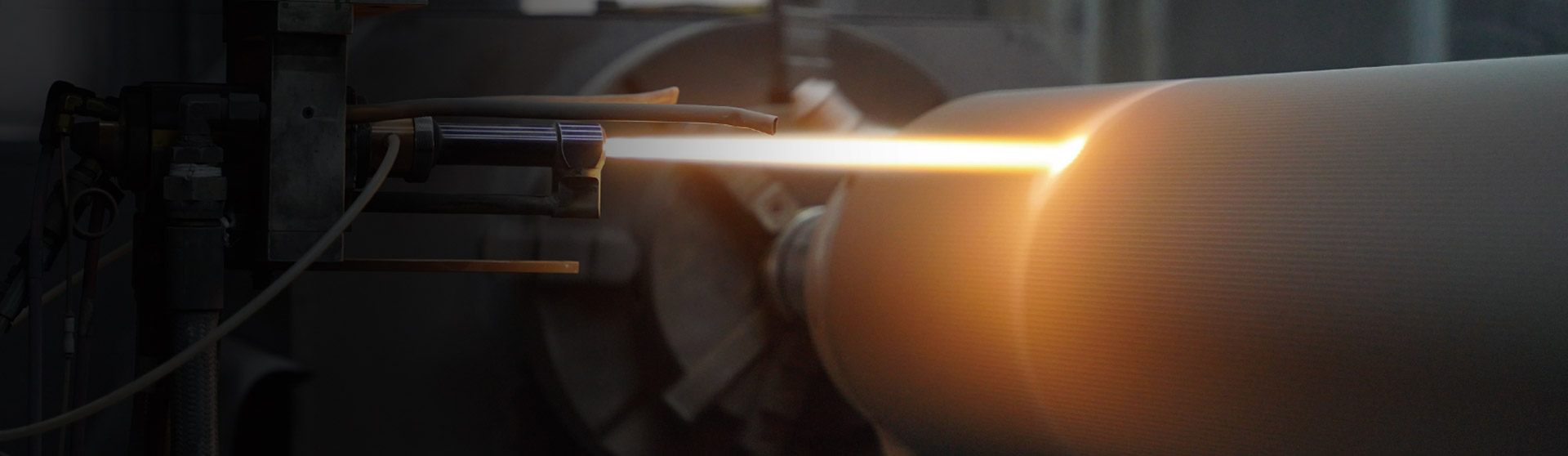

Stable machine settings do not always guarantee uniform adhesive application across the entire width of corrugated board. During single facer and gluing operations, operators may find that the center area, left edge, and right edge of the board receive slightly different glue film thicknesses even though speed, pressure, and gap values appear unchanged.
The reason is that adhesive distribution depends on a combination of mechanical precision, roller geometry, starch characteristics, and dynamic loading conditions. A modern Corrugated Cardboard Gluing Machine relies on precise interaction between the glue applicator roll, metering roll, doctor system, and corrugated medium surface. The gap between these components directly influences adhesive film thickness, while roller runout and parallel accuracy can create variations across the machine width.
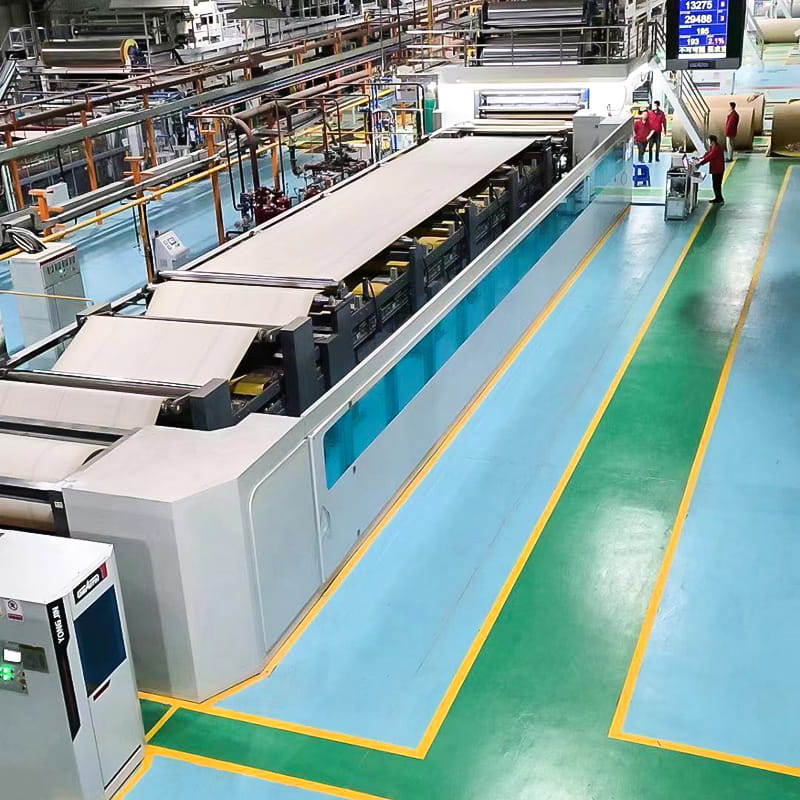
Machine settings may remain stable while roller conditions change
Many production teams check glue gap settings initially after discovering uneven bonding. However, the displayed setting value does not always represent the actual condition between rotating components.
Rollers experience continuous mechanical loading during operation. Small deviations in roundness, alignment, or surface wear can change the real glue gap from one area of the machine to another.
- Roll parallelism variation creates different pressure conditions across board width.
- Roll surface wear changes local adhesive transfer behavior.
- Shaft deflection may appear under operating load even with correct static adjustment.
Research on corrugated glue rolls indicates that out-of-round or non-parallel glue rolls can change the gap between the glue roll and metering roll during rotation, causing adhesive film thickness to move between thicker and thinner areas.
Glue roll geometry influences adhesive film distribution
The glue applicator roll is responsible for transferring starch adhesive onto flute tips. Its surface structure, diameter accuracy, and rotational stability directly affect the thickness of the adhesive layer.
A precision-engineered glue roll typically uses an engraved surface pattern to control starch pickup volume. The metering roll then removes excess adhesive and regulates the remaining film thickness before transfer.
- Uneven engraving depth may create different starch carrying capacity across the roll.
- Diameter differences from center to edge can influence glue gap consistency.
- Surface damage or contamination may interrupt adhesive transfer.
Even a small dimensional change becomes significant on wide corrugation lines because the glue roll contacts thousands of flute tips every minute.
Hydraulic pressure and loading effects across machine width
Mechanical pressure distribution is another factor affecting glue film thickness. A long roller assembly may experience different loading conditions between the center and two ends.
The center section often carries higher structural stress, while edge areas may respond differently depending on frame rigidity, bearing condition, and adjustment method.
- Center pressure concentration can reduce effective glue gap in middle areas.
- Edge pressure variation may create thicker or thinner adhesive zones.
- Uneven mechanical support influences roller contact stability.
This explains why operators may observe different glue patterns between board edges and the center even during continuous production.
Starch viscosity changes during high-speed operation
Adhesive properties also influence film thickness stability. Starch glue is sensitive to temperature, concentration, shear force, and storage time.
A Corrugated Cardboard Gluing Machine must maintain consistent adhesive flow from the glue pan to the applicator roll. Changes in viscosity can affect how easily starch transfers through the metering system.
- Higher viscosity may increase adhesive buildup on roller surfaces.
- Lower viscosity may reduce glue holding capacity.
- Temperature fluctuation can change starch flow characteristics.
Even with identical machine parameters, adhesive behavior may shift during long production periods because starch properties are not completely static.
Doctor roll gap accuracy controls glue film thickness
The metering system is a important control point in adhesive application. The gap between the glue applicator roll and doctor roll determines how much starch remains on the applicator surface.
Modern glue machines may use automatic systems to adjust adhesive film thickness through controlled doctor roll positioning. Some industrial glue machines include automatic film thickness control and motorized doctor roll gap adjustment functions to maintain more consistent adhesive application.
- Incorrect gap setting changes overall adhesive volume.
- Uneven gap across width creates regional glue differences.
- Delayed adjustment response allows temporary thickness fluctuations.
Paper properties can amplify small glue variations
Different paper grades respond differently to the same adhesive amount. Linerboard and medium paper vary in surface absorption, fiber structure, and moisture content.
A slight difference in glue film thickness may have little effect on one paper grade but create visible bonding changes on another.
- High absorption paper may require additional adhesive control.
- Low moisture paper may influence starch penetration speed.
- Different GSM levels change bonding response.
How manufacturers improve glue thickness consistency
Improving adhesive uniformity requires cooperation between equipment design, roller precision, and process monitoring.
- Precision roller machining reduces diameter and alignment variation.
- Regular TIR inspection identifies runout problems before they affect production.
- Automatic glue gap control improves adjustment response.
- Stable starch management maintains predictable adhesive behavior.
Equipment suppliers often focus on these areas during the design of advanced gluing systems because adhesive consistency directly affects board strength, appearance, and production waste.
Understanding the hidden causes behind glue variation
Glue film thickness differences across board width are rarely caused by a single factor. A machine may show stable speed and settings while hidden variables such as roller geometry, pressure distribution, or adhesive condition create uneven application.
The performance of a Corrugated Cardboard Gluing Machine depends on the precision relationship between every rotating component. Small mechanical deviations can influence starch transfer, making regular inspection and accurate component design important parts of reliable corrugated production.
Consistent adhesive application comes from controlling the complete system rather than adjusting one parameter alone. Roller accuracy, glue gap stability, and starch characteristics work together to determine whether every section of the board receives a uniform bonding layer.